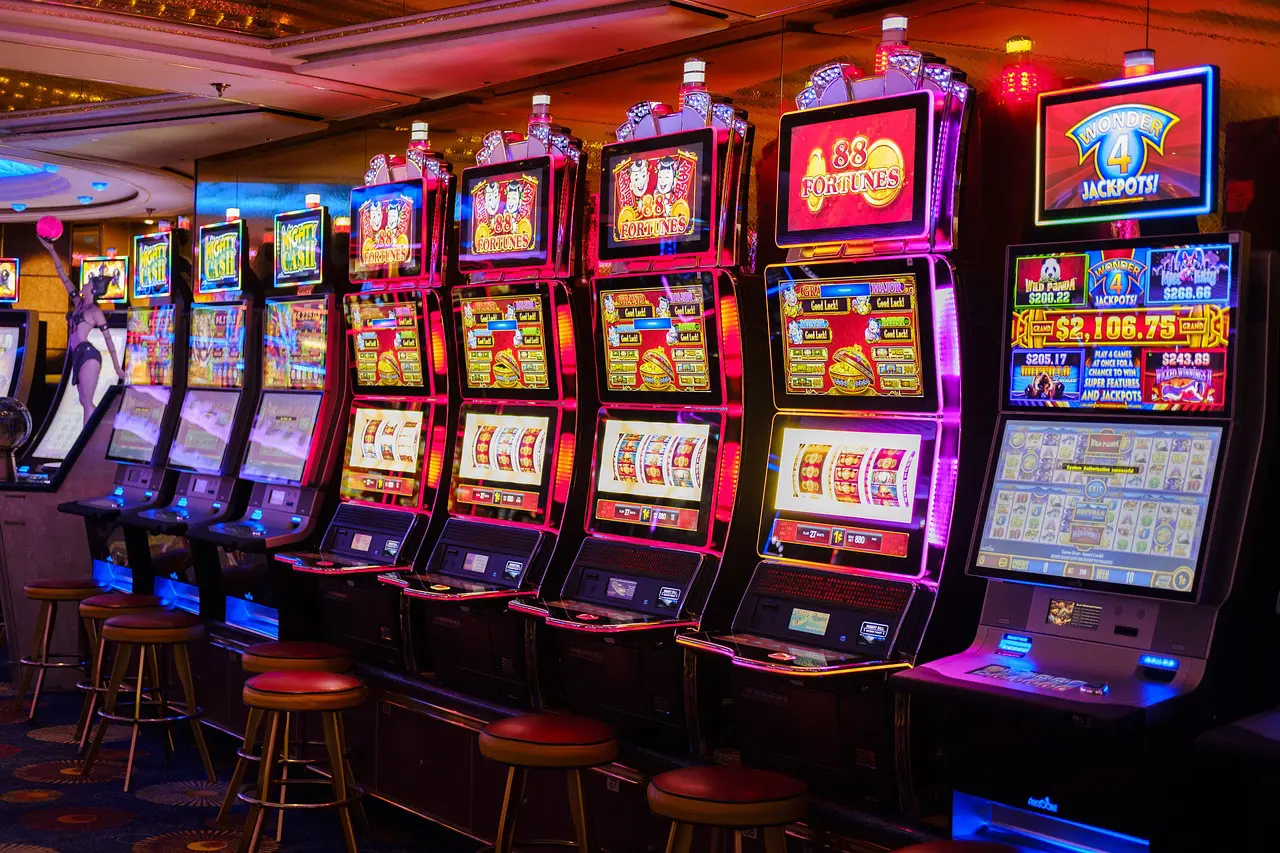
The concept of slot gacor continues to be one of the most discussed ideas in online slot gaming communities. It is often used to describe games that feel like they are “paying out more than usual.” However, when examined through data science, probability theory, and game design principles, the idea of a predictable “gacor state” becomes far less convincing.
This article takes a deeper look into how randomness behaves in slot systems and why human interpretation often conflicts with statistical reality.
Slot Systems as Probability Engines
Modern online slots are not designed as mechanical “machines with moods,” but as probability engines. Each spin is generated by a Random Number Generator (RNG), which produces outcomes based on mathematical distributions rather than patterns.
In simplified terms:
- The system generates thousands of possible outcomes per second
- The exact moment you press spin selects one outcome
- That outcome is fixed instantly and independently
This means there is no internal memory, no emotional state, and no “hot cycle” that could create a true slot gacor mode.
Understanding the Law of Large Numbers
One of the most important principles in gambling mathematics is the Law of Large Numbers. It explains why short-term results can look chaotic while long-term averages stabilize.
Over a small number of spins:
- A player may experience extreme winning or losing streaks
- Results can deviate significantly from expected RTP
Over millions of spins:
- The average return converges toward the theoretical RTP value
- Variance becomes statistically balanced
This gap between short-term volatility and long-term stability is the main reason players believe in slot gacor behavior.
Why Streaks Feel Like Patterns
Human brains are highly sensitive to sequences. When we see repeated outcomes—such as multiple wins in a row—we instinctively assign meaning to them.
This leads to three major biases:
1. Clustering Illusion
Random data naturally produces clusters, but humans interpret them as structured patterns.
2. Recency Bias
Recent wins feel more important than earlier losses, distorting overall perception.
3. Emotional Weighting
Big wins leave stronger memories than frequent small losses.
Because of these biases, a random cluster of wins can easily be interpreted as a “gacor phase,” even though it is statistically expected.
Monte Carlo Thinking: Simulating Reality
If we simulate slot outcomes using a Monte Carlo model (a statistical simulation method), we can clearly see how randomness behaves.
Even with identical RTP and probability settings:
- Some sessions show rapid wins
- Some show long dry spells
- Some appear “too lucky” or “unlucky”
None of these patterns are meaningful—they are all normal outcomes of variance. The illusion of slot gacor emerges naturally from these fluctuations, not from any hidden system behavior.
The Misinterpretation of RTP in Real Play
RTP (Return to Player) is often misunderstood as a short-term indicator. In reality, it is a theoretical long-run average, not a session prediction tool.
For example:
- A 96% RTP slot does not guarantee 96% return in a session
- It may return 20%, 200%, or even 0% in short bursts
- Only large sample sizes reveal its true value
This mismatch between expectation and reality often fuels the belief that certain games are currently “hot” or “cold.”
Volatility Shaping the “Gacor Effect”
Volatility plays a major role in how players experience randomness.
- High volatility = rare but large wins
- Low volatility = frequent but small wins
High volatility games are especially prone to being labeled as slot gacor when a winning streak occurs, because the contrast between long dry periods and sudden payouts feels dramatic. However, this is still pure probability, not a change in game state.
Cognitive Loops in Gambling Behavior
Once a player believes in a slot gacor moment, a feedback loop can form:
- A winning streak occurs
- The player attributes it to a “hot slot”
- They continue playing expecting repetition
- Randomness eventually changes outcomes
- The belief is reinforced or adjusted selectively
This loop is powerful because it combines randomness with emotional reinforcement, making subjective experience feel like evidence.
The Illusion of Control
Another psychological factor is the illusion of control—the belief that personal actions influence random outcomes.
In slot gaming, this appears as beliefs such as:
- Changing bet size affects win probability
- Timing spins improves results
- Switching games resets “luck”
None of these actions interact with RNG logic. However, they create a sense of control that strengthens belief in slot gacor patterns.
Why the Concept Persists Despite Evidence
Even when players understand randomness intellectually, the idea of slot gacor persists because:
- Human memory prioritizes emotional events
- Communities reinforce shared interpretations
- Randomness naturally produces convincing illusions
- Short-term experiences feel more “real” than abstract probability
In other words, experience often outweighs mathematics in perception.
Conclusion
The idea of slot gacor is not supported by mathematical or technical evidence. Instead, it emerges from the intersection of randomness, cognitive bias, and social reinforcement. Slot systems are governed by RNG algorithms and probability laws, which ensure that every outcome is independent and unpredictable.
While players may experience sequences that feel meaningful, these are natural expressions of variance—not indicators of hidden patterns or special game states. Understanding this distinction helps separate emotional interpretation from statistical reality, leading to a clearer and more grounded view of how slot systems actually work.
Leave a Reply